Halal
Permissible under Islamic law — watch for pork, alcohol, mirin and sake in seasoning.
Halal in Japan
Halal means permissible under Islamic law: no pork or pork by-products, no alcohol, and meat (beef, chicken, lamb) slaughtered according to Islamic rules. Tokyo's halal scene has grown a lot — there are now halal-certified ramen, wagyu/yakiniku, and Japanese restaurants, plus many Muslim-friendly places.
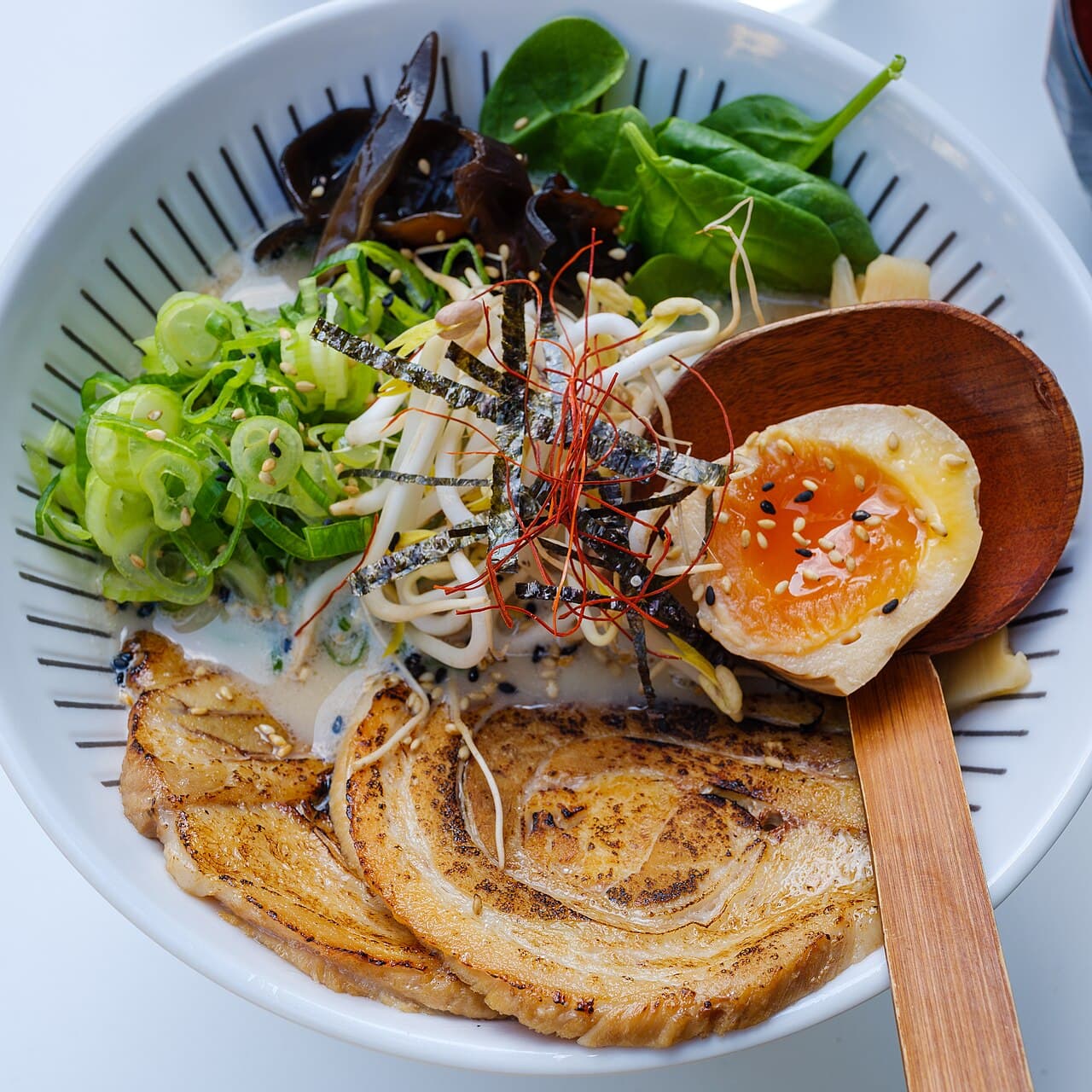
The Japanese-specific traps are in the seasoning: mirin and cooking sake (both contain alcohol) flavour countless dishes, regular shoyu (soy sauce) is brewed with a little alcohol, and many ramen and tonkatsu use pork. Even "chicken" dishes may share a fryer or grill with pork.
Certified vs. Muslim-friendly
- Halal-certified: audited by a halal authority — the safest choice.
- Muslim-friendly: no pork/alcohol on request, but not formally certified.
We label both. Use the filter to find them, confirm certification level if it matters to you, and use the phrases below.
What to watch for in Japan
- Pork in ramen broth (tonkotsu), gyoza, tonkatsu, and as a hidden topping
- Mirin and cooking sake — alcohol used in glazes, simmered dishes, teriyaki
- Regular soy sauce and miso may contain trace alcohol
- Shared fryers/grills between pork and other meats
Useful phrases
豚肉とお酒(アルコール)は食べられません。
Butaniku to osake (arukōru) wa taberaremasen.
I can't eat pork or alcohol.
みりんや料理酒は使っていますか?
Mirin ya ryōrishu wa tsukatte imasu ka?
Do you use mirin or cooking sake?
ハラル認証はありますか?
Harāru ninshō wa arimasu ka?
Is this place halal-certified?