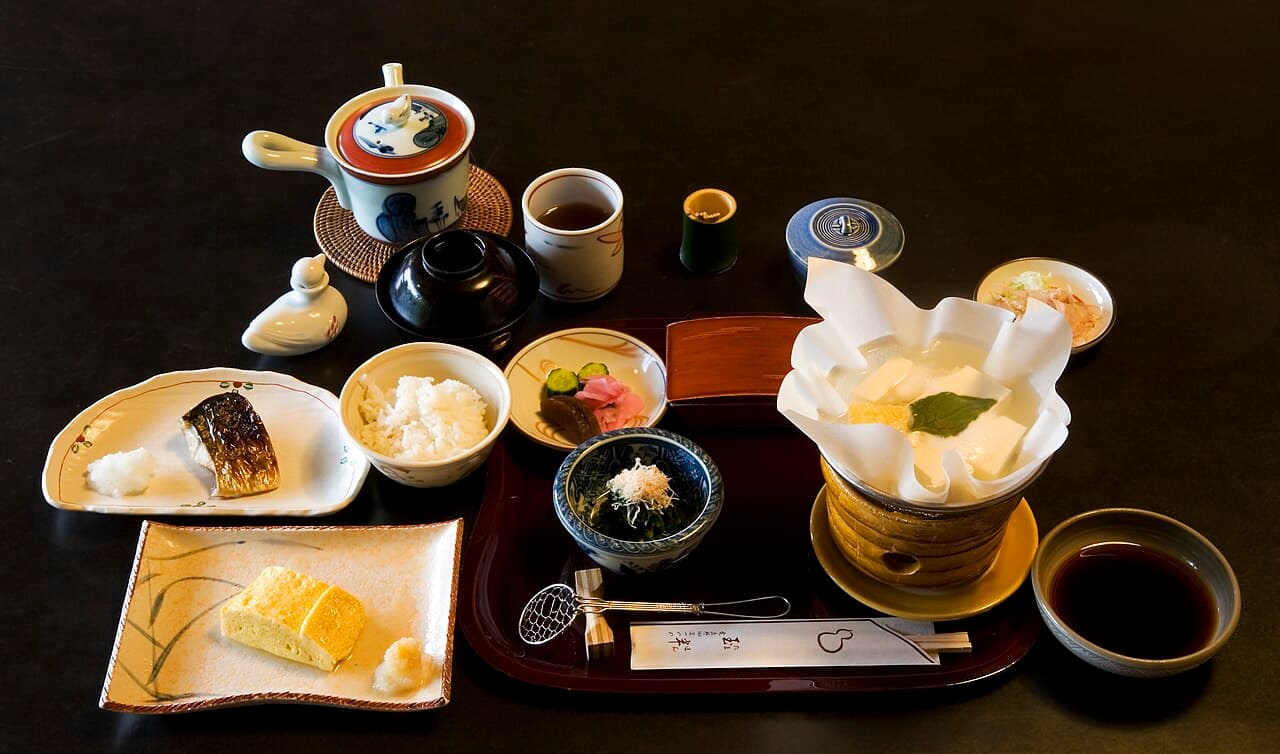
Kaiseki is a multi-course seasonal menu, the pinnacle of washoku (traditional Japanese cuisine). Small, precise dishes move through cooking methods — raw, simmered, grilled, steamed — each tuned to the moment of the year and presented on chosen ware.
What it means
Kaiseki grew from the tea ceremony's spirit of hospitality (omotenashi) and Zen restraint. Every detail — the order, the seasonal leaf, the bowl — is a quiet message from host to guest. It's less a meal than a composed experience.
Why it's wonderful
It's the deepest way to taste the Japanese seasons in one sitting: subtle, balanced, never heavy, building slowly to a gentle, memorable whole.
★ Seasonal shojin kaiseki paired with sake and wine, refreshed every three weeks
A refined Roppongi shojin restaurant led by chef Daisuke Nomura, formerly of two-Michelin-starred Daigo, pairing plant-based Zen cuisine with carefully chosen sake and wine.
★ Plant-based 'meat & fish' course made entirely from vegetables
Once crowned the world's #1 vegan restaurant on HappyCow, this Jiyugaoka temple of 'new washoku' conjures convincing meat and fish dishes from nothing but vegetables — and welcomes vegan and Muslim diners alike.
A three-Michelin-star Kagurazaka kaiseki restaurant serving a seasonal omakase course. Kaiseki traditionally includes some meat/dashi, so a pescatarian (seafood, no-meat) menu must be requested in advance and confirmed directly. Not gluten-free.
★ Seasonal Mie-Prefecture kaiseki course (halal version on request)
A counter-style kaiseki restaurant in Nishi-Azabu offering a dedicated multi-course menu made without pork, alcohol or mirin on advance request. Muslim-friendly / pork- and alcohol-free (not formally certified); book the halal course about a week ahead.