Vegetarian
No meat or fish — but in Japan "vegetarian" food often still contains fish stock.
Vegetarian, the Japanese way
Most Western vegetarians avoid meat and fish but eat dairy and eggs (lacto-ovo). In Japan the word bejitarian is understood, but the assumption that "no meat = vegetarian-safe" breaks down because of dashi, the fish-and-kelp stock used almost everywhere.
A plate of simmered vegetables, a bowl of miso soup, or soba dipping sauce can all contain katsuobushi (bonito). Many staff won't think to mention it, so it's worth asking directly.
Where it gets easy
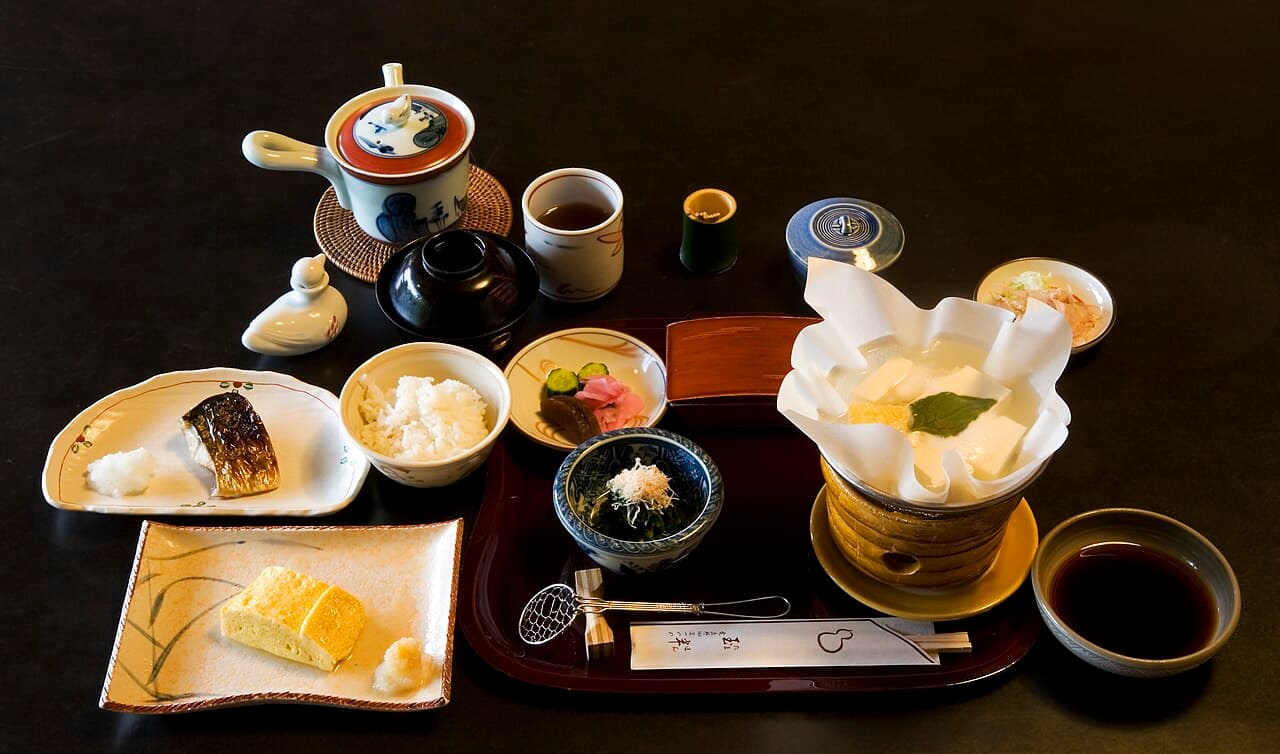
Shojin ryori (Buddhist temple cuisine) is naturally vegetarian and built on kelp/shiitake stock. Indian restaurants, a growing number of cafes, and many izakaya can also do genuinely vegetarian dishes if you ask. Tempura, tofu, yuba, agedashi and vegetable sushi are great anchors — just confirm the batter and dipping sauces.
Filter for vegetarian-friendly venues here, then use the phrases below to check the stock.
What to watch for in Japan
- Fish stock (dashi / katsuobushi) hidden in 'vegetable' dishes
- Bacon or chicken in salads and sautéed vegetables
- Fish sauce, oyster sauce and shrimp in stir-fries
- Gelatin in jellies and some desserts
Useful phrases
私はベジタリアンで、肉と魚は食べません。
Watashi wa bejitarian de, niku to sakana wa tabemasen.
I'm vegetarian — I don't eat meat or fish.
この料理に肉や魚のだしは入っていますか?
Kono ryōri ni niku ya sakana no dashi wa haitte imasu ka?
Does this dish contain meat or fish stock?