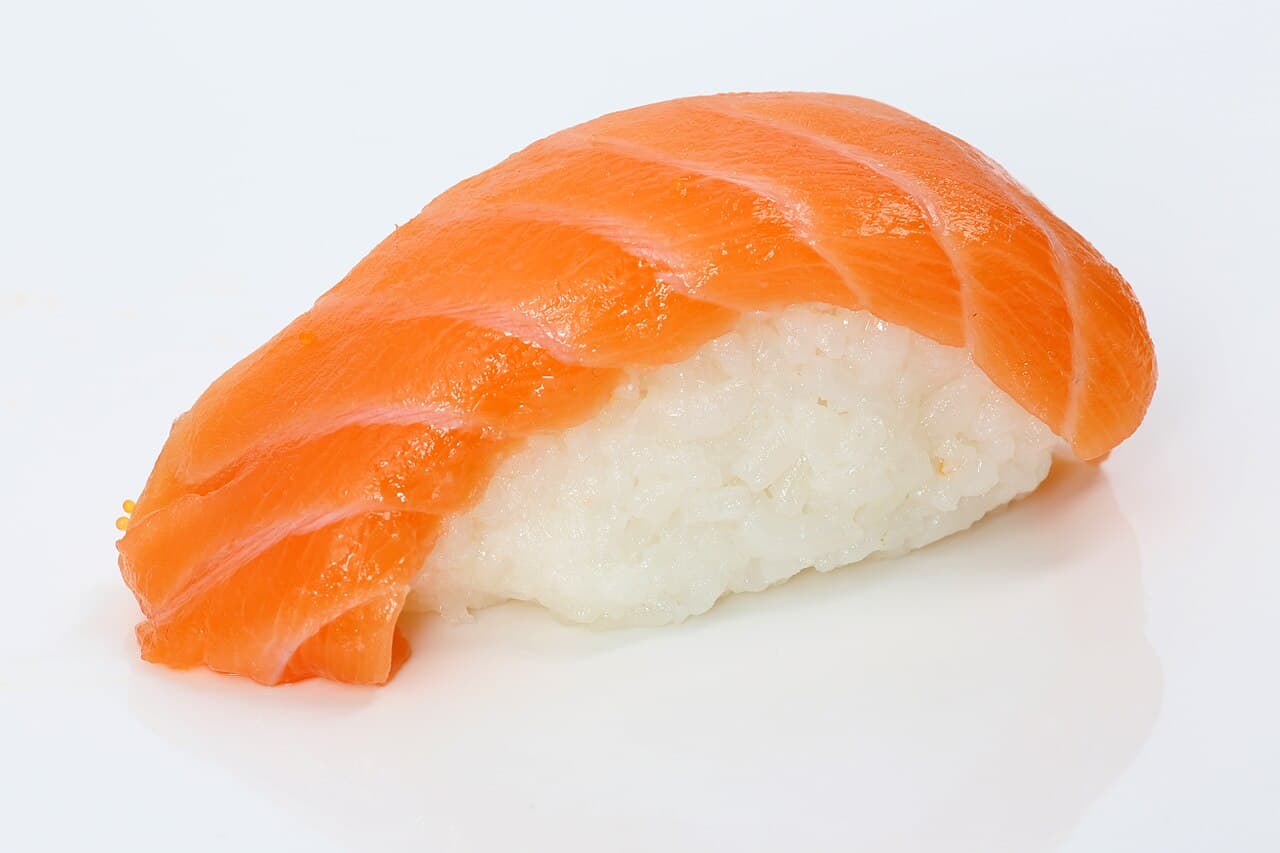
Sushi is, at heart, vinegared rice (shari) paired with seafood, vegetables or egg. The Tokyo style is Edomae nigiri — a hand-pressed pillow of warm rice topped with a slice of fish. Maki (rolls), gunkan (battleship), temaki (hand rolls) and chirashi (scattered bowl) are all part of the family.
What it means
Sushi was born as fast street food in 19th-century Edo (old Tokyo), a way to enjoy the day's catch from the bay. That heritage survives in its discipline: a great sushi chef spends years on rice temperature, knife work, and the seasoning of each piece. To eat sushi is to taste a craft refined over two centuries.
Why it's wonderful
At its best, nigiri is a study in contrast — cool fish, body-warm rice, a whisper of wasabi and nikiri soy. Eaten at the counter, in the order the chef intends, it becomes a quiet conversation between you and the maker.
★ Edomae nigiri course — soy sauce to fish, all halal-certified
Japan's first halal-certified sushi house, steps from Senso-ji, serving full Edomae nigiri — soy, fish and pickles all halal — with a second-floor prayer room built with the local mosque.
A long-established (1889) Edomae sushi house in the Tsukiji Outer Market that stayed open after the market's relocation, serving classic nigiri sets and sashimi. As seafood-and-rice sushi it is naturally pescatarian; not gluten-free (soy sauce contains wheat).
A famous Toyosu Market sushi counter (relocated from old Tsukiji) serving a chef's-selection omakase noted for its premium tuna. Pure seafood-and-rice sushi makes it naturally pescatarian; early market hours and not gluten-free (soy sauce contains wheat).